
El Fu-Toro
2025, Graphic Design + Illustration
Year-long Capstone Project



“The Brief”
For the capstone project of my dual-major degree, I was tasked to develop a 1-year fine art/design project that addressed a topic from my Spanish studies. I was inspired by my semester abroad in Barcelona where I noticed the prevalence of bull imagery as a symbol of Spain, despite Catalunya’s complicated relationship with Central Spain.
As I discovered in my research, bull iconography in Spain can be traced back over 35,000 years, with bulls playing a crucial role in agriculture, cuisine, and (of course) entertainment. But while bullfighting imagery oversaturates tourist shops, bullfighting has actually fallen out of favor across the country, especially in many autonomous regions who have had their individual cultural identities suppressed and silenced. So if the bull symbol in its current state is no longer relatable to much of Spain, why is it still THE Spanish symbol?
Thus, El Fu-Toro was created. This project uses travel posters to delve into the history of the bull symbol in Spain, aiming to express these complexities specifically to foreign audiences. Using semiotics, the series considers how simple changes in the use and depiction of the bull can change the entire world’s perception of Spanish identity, and maybe even Spain’s perception of itself.
Planning draft 1
Solving these roadblocks brought me to the structure seen to the right, featuring two distinguished sides. The series would have two chronological paths that explored the positive and negative connotations of the bull symbol, converging in the middle with two speculative pieces as to the future of the bull in Spain.
Each piece would contrast to the piece in the same location on the other side, using text, visual style, and tone to develop a clear message through comparison.
Planning draft 2
A Closer Look
Upholding “tradition” is a major argument supporting the continuation of bullfights and the use of the bull symbol as it is today.
However, the first appearance of the bull symbol in Spain occurred thousands of years before the first bullfight: as paintings in the Altamira caves. The bulls here are depicted as peaceful animals living in herds, likely a crucial part of daily life for early humans. This stands in stark contrast to the singular, aggressive bull figure that dominates the bull imagery today.
This pair questions how traditions are cherry-picked to support a certain agenda, and that there may be credence to the idea that the bull symbol should represent a far more integral aspect of Spanish identity.
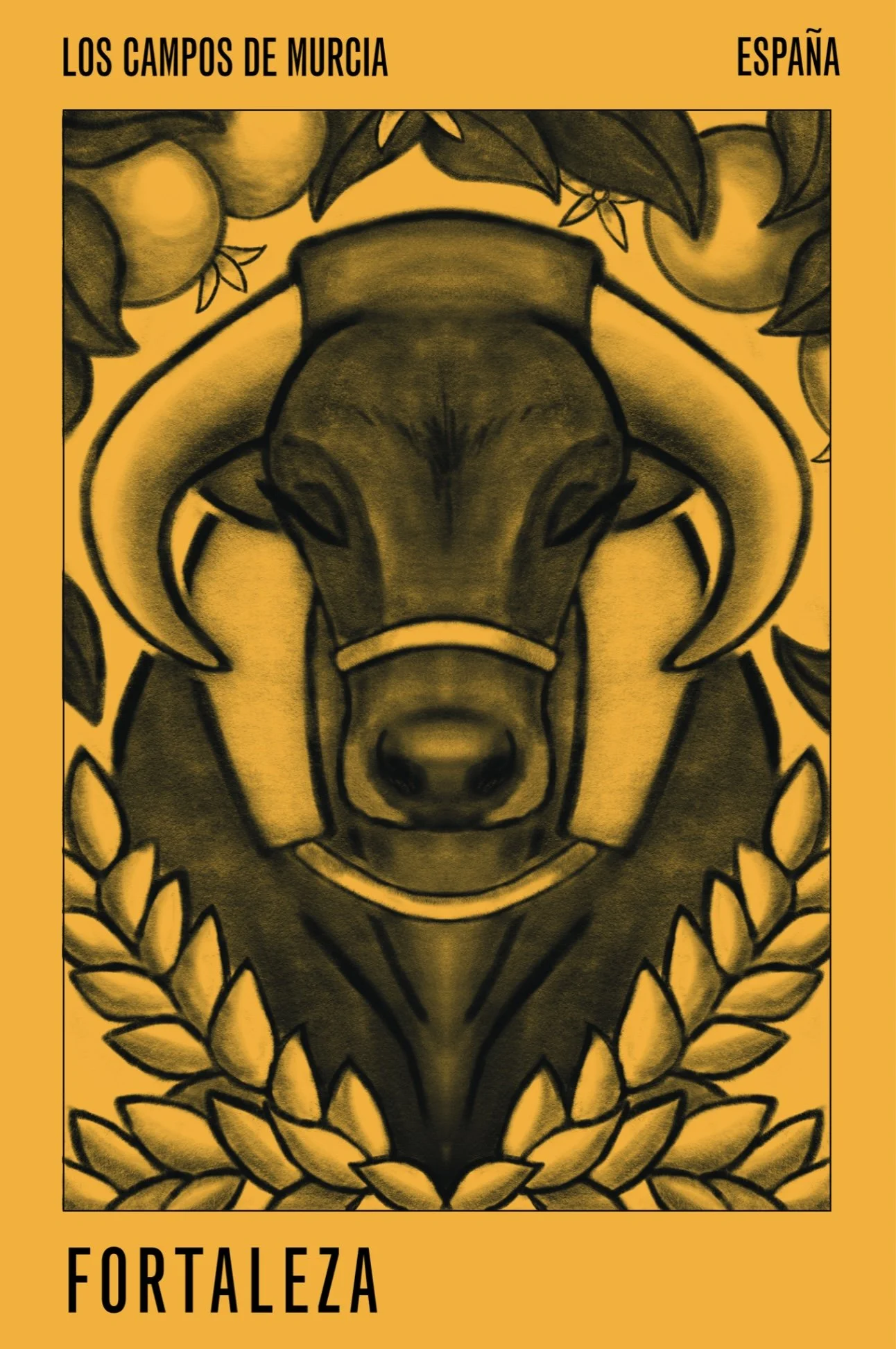
Fortaleza and fuerza both translate to “strength,” but they describe different kinds of power. Fortaleza is strength in character—the ability to endure hardship and remain steadfast in the face of oppression. Fuerza, alternatively, is strength through force—the power to dominate and impose one’s will on others.
Spain’s history is deeply intertwined with both forms of strength, from the conquistadors’ conquest of Central America to Franco’s repression of cultural minorities during his dictatorship. Bullfighting continues to embody ideals of masculinity, authority, and violence, preserving them as symbols of Spanish identity even as modern Spain has become a leader in social progress.
Agriculture, by contrast, unites Spain’s regions and offers a different image of national identity. Spain is renowned for its olives, grapes, citrus, and other crops, making stability and prosperity a more fitting reflection of the country today. Additionally, bulls have long been essential to Spanish agriculture, with some working breeds In Murcia even having downward-curving horns to avoid becoming entangled in trees as they work the fields.
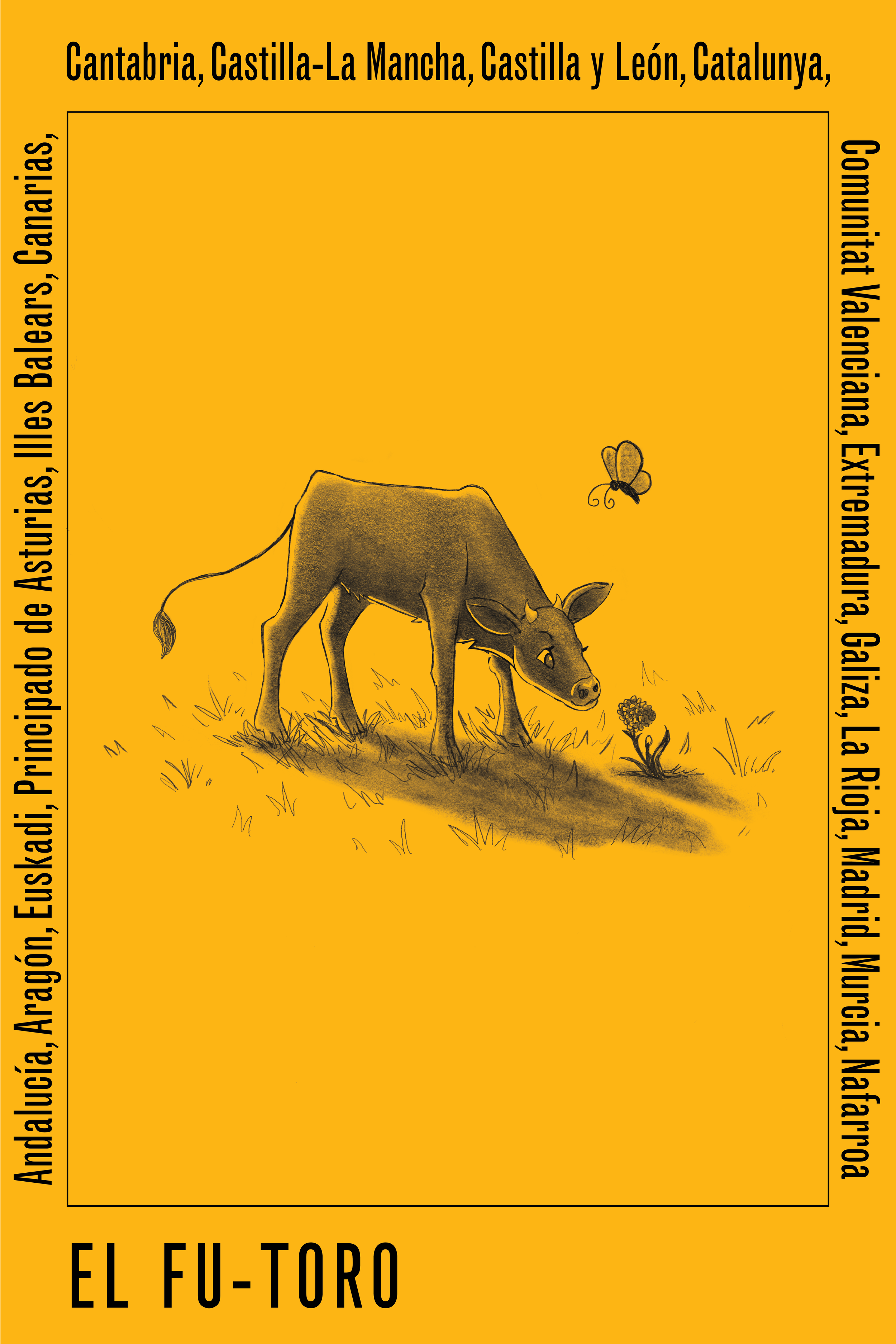
El Fu-Toro is a play on “el futuro” and “toro” - quite literally asking what the future holds for the bull symbol. Together, these two works speculate whether the bull symbol can evolve into a positive representation of modern Spain, or will continue to devolve as a marketable lie.
Ferdinand is an internationally known story about a Spanish bull that refused to fight, eschewing the ring for kindness and an appreciation for beauty. When it was released, Franco banned the book as “subversive propaganda”, which tells you everything you need to know about Franco’s vision for Spain. The image of Ferdinand here represents a new chapter of Spanish history: becoming a global leader of goodness rather than oppression. It is surrounded by the names of all the regions of Spain in their own languages, uniting Spain under one symbol without erasing its diversity.
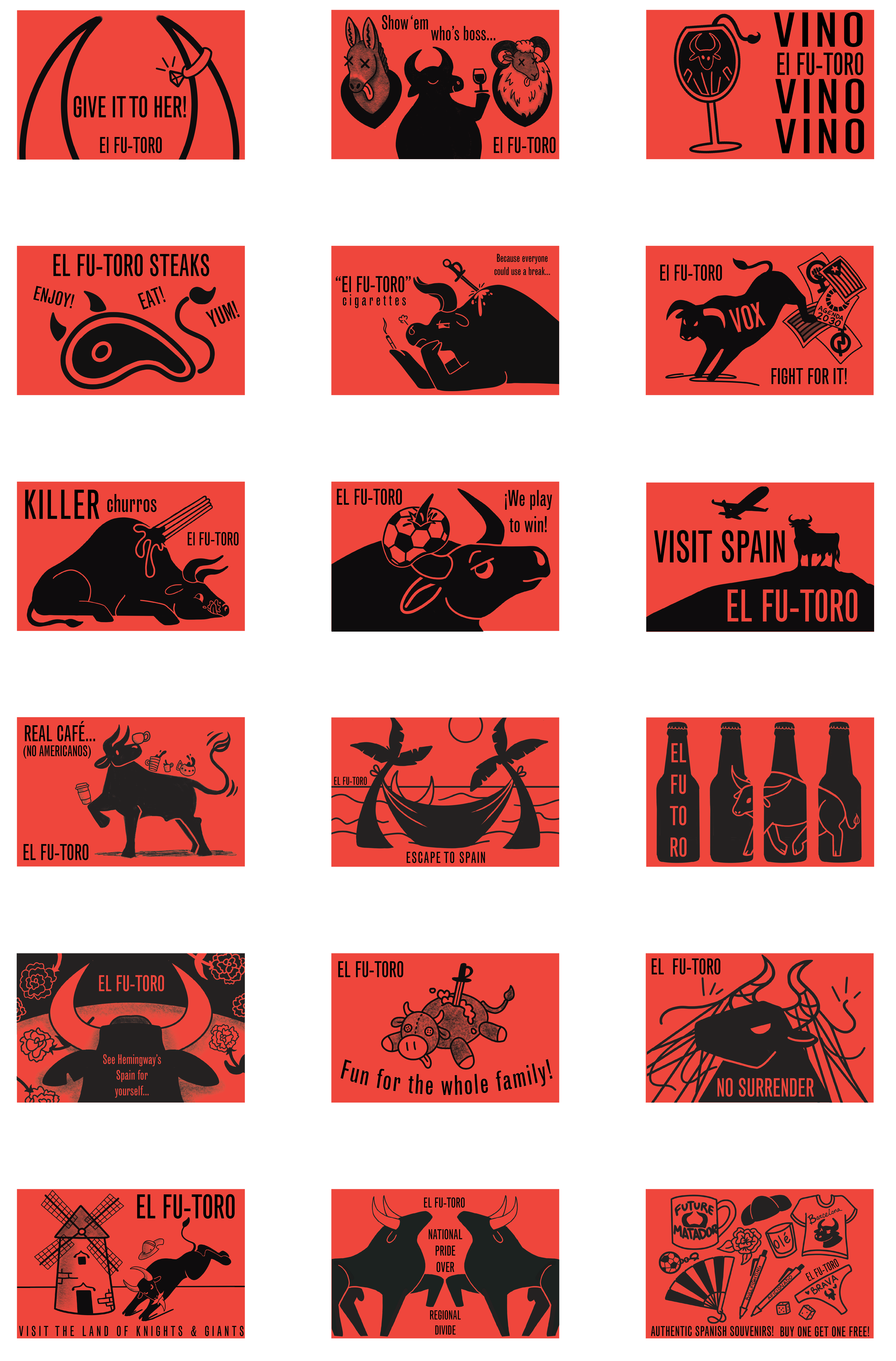
The other piece is defined by stereotype: what we see in old movies and on giftshop t-shirts. This is the same tired version of the bull symbol that does nothing to acknowledge how Spain has grown and changed over the past fifty years. Misogyny, cultural erasure, and violence continue to be synonymous with Spain’s national symbol, as tourists continue to blindly buy and buy and buy.
The Process
The first iteration of this project took the form of a multimedia sculpture titled Upholding Bull. This piece focused more on comparisons between the treatment of women and bulls in modern-day Spain, expressing the disconnect of upholding harmful societal structures due to “tradition” amidst a national push for social change. Through my research, I discovered there was much more about the bull symbol that I wanted to speak on, and a single-form sculpture no longer felt like the most effective medium for my project.
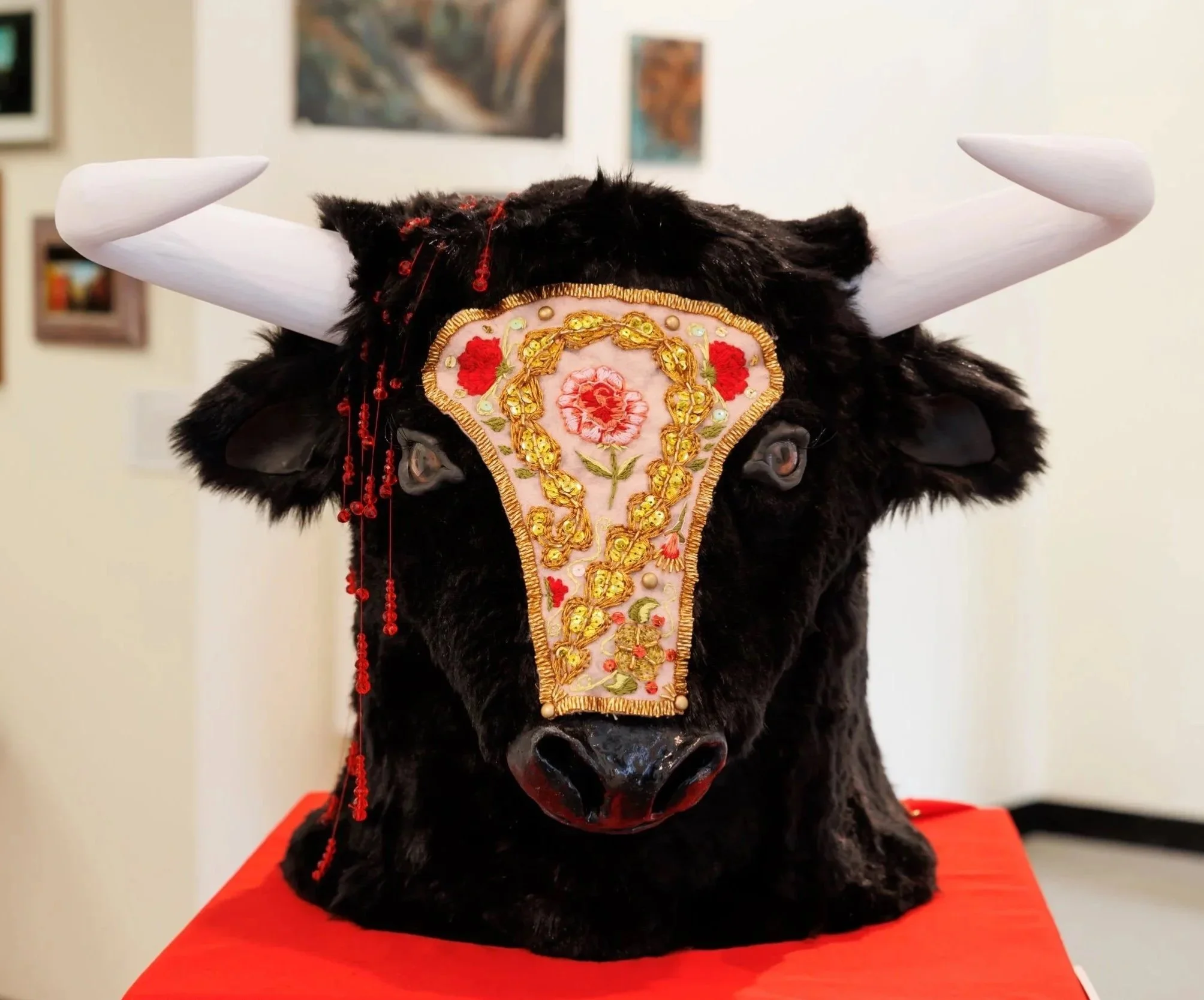
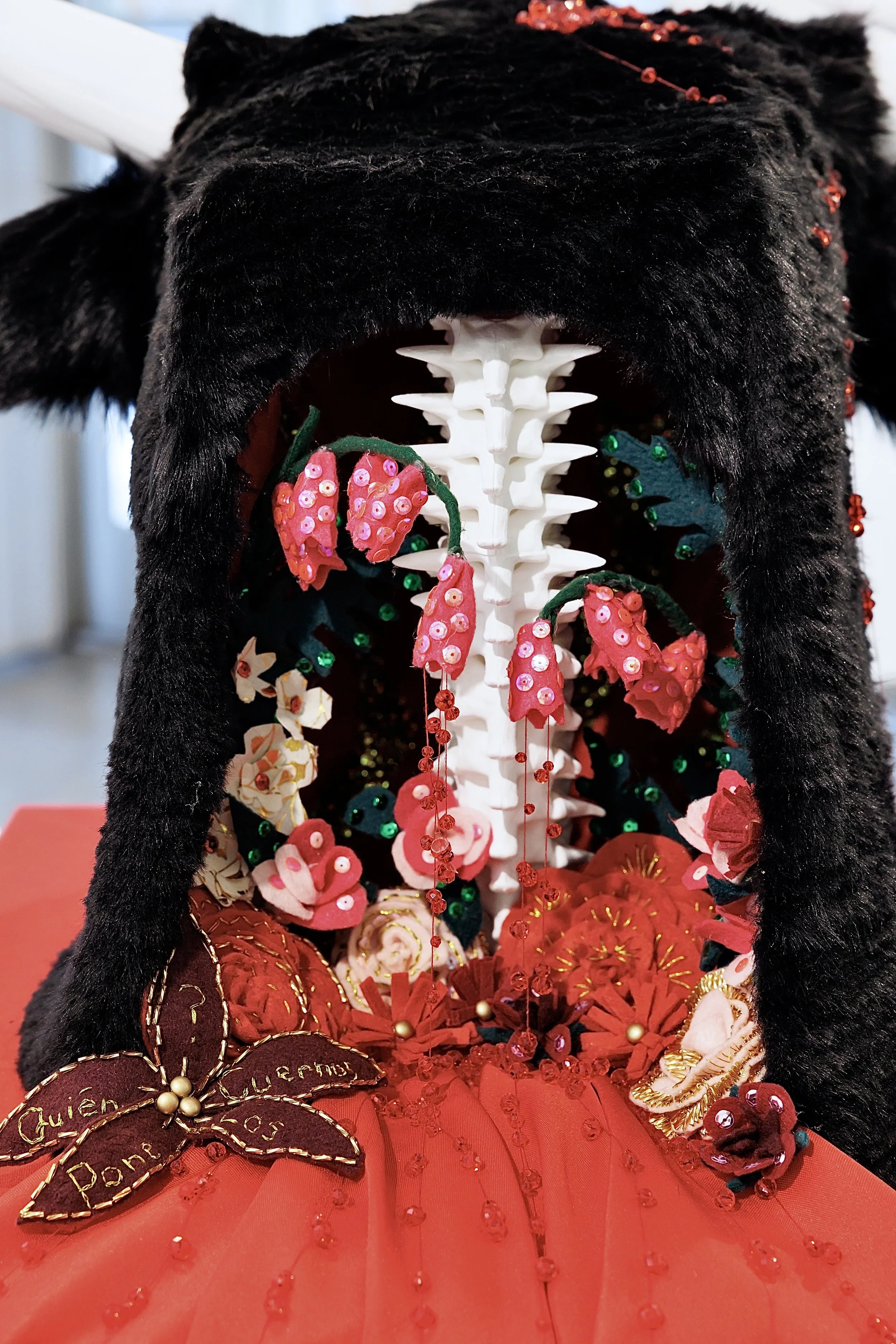
Upholding Bull (2024)
My project gradually came to cohesion as I conducted research and developed my thesis paper. The “key points” of my paper instructed the themes of my posters, keeping the overall project succinct and compelling in only focusing on the most important versions of the bull symbol.
Originally, I wanted each poster to have a different visual style, but I struggled to keep the project cohesive. Additionally, the organization of the posters posed a challenge, as I wanted to use a chronological structure but found the piece’s message kept getting lost in translation.
One thing that did not change, however, was my decision to transition to travel posters as my medium. Travel posters are used for persuasion, manipulating perceptions of a country, and connecting with foreigners - all of which aligned with my subject of how the bull symbol accomplishes these same goals.